Author: Hoopless

SEO For Family Law: Top 10 SEO Tips & Best SEO Companies For Family Lawyers

A couple has decided to divorce. It’s not a decision they made lightly, and by the time they’re searching online, emotions are running high. They open Google and type ‘divorce lawyer near me.’ They scroll past the ads, glance at the Map Pack, and call the first firm that looks credible with good reviews.

But as you may already know… that firm might not be the best one in town. It might not even be the most experienced. But it showed up, it had reviews, so they got the case.

This is the reality of family law in 2026. People facing divorce, custody battles, and child support disputes don’t have time to research ten law firms, and younger generations are less likely to ask their network – they search online. If your firm isn’t visible at that exact moment, a competitor gets the case.

The same is true in ChatGPT or Gemini. We’re seeing extremely high conversion rates for LLM traffic and leads, which means people who search with AI are in decision-mode.

The good news: most family law firms are still doing SEO wrong. Their GBP is incomplete, their website has one catch-all ‘Family Law’ page, their strategy hyper-local strategy is non-existent, and they haven’t asked a client for a review in months. (That’s an opportunity!)

This guide covers exactly what to fix.

Why Family Law SEO Is Different

Family law isn’t like remodeling or HVAC. The person searching isn’t planning a renovation. They’re scared, overwhelmed, and often making one of the biggest decisions of their life. That context changes everything about how SEO works in this space.

  • YMYL and E-E-A-T. Google classifies legal content as ‘Your Money or Your Life’ content, meaning it holds it to a higher standard. Generic, thin content doesn’t rank here. Google wants to see demonstrated expertise, real authorship, and authoritative signals before it trusts your pages with high-intent queries.
  • State bar compliance. Your content, reviews, and ad copy all have to stay within your state bar’s advertising rules. No guaranteeing outcomes. No misleading claims. Most agencies don’t know this. The ones that do are worth their retainer.
  • Privacy-sensitive clients. Family law clients are often reluctant to leave reviews. A divorce or custody case isn’t something most people want broadcast publicly. Your review strategy has to account for this, and it needs to be handled with care.
  • Hyperlocal by nature. Family law is governed by state law and often county court procedure. Clients want an attorney who knows their local courthouse, their local judges, and the norms of their specific jurisdiction. Statewide SEO is the wrong frame. County-level SEO is where the cases are.
  • High urgency, low patience. Someone searching for a divorce lawyer isn’t going to read ten pages of your website. They need to see credibility signals fast: reviews, a complete GBP, a clear phone number, and a firm that looks active and accessible.

Top 10 SEO Tips For Family Law Firms

Tip #1: Nail Your Google Business Profile Categories

If your GBP primary category is ‘Law Firm’ and you practice family law, you are competing against every attorney in your market on the broadest possible term. You will lose that fight, especially against larger multi-practice firms.

Your primary category should be ‘Family Law Attorney.’ If you also handle divorce specifically, add ‘Divorce Lawyer’ as a secondary. Google gives you up to 10 categories. Use them. Common secondaries for family law firms:

  • Divorce Lawyer
  • Child Custody Attorney
  • Legal Services
  • Mediation Service (if applicable)
  • Estate Planning Attorney (if applicable)

The primary category is the single highest-impact GBP change most family law firms can make and it takes 30 seconds.

Tip #2: Build Out Your GBP Services Section

The GBP services section is not a formality. It is a ranking signal, and the auto-suggested services inside it have a documented track record of boosting Map Pack performance. Most family law firms leave this section vague or blank entirely.

So, most importantly: Be sure to choose Google’s auto-suggested services, and you can add services for each of your categories. These have been proven to directly affect visibility for specific service terms.
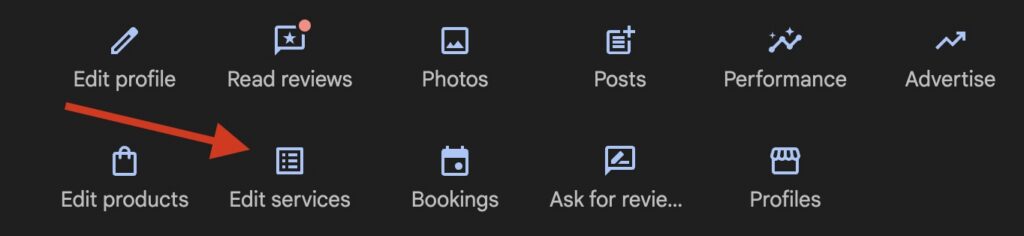
You can also add custom services, which have been shown to also affect rankings, though much milder compared to auto-suggested service terms.

Family lawyers should consider adding some of these services to Google Business Profile:

Divorce Lawyer (category)
• Child support litigation
• Collaborative divorce representation
• Contested divorce litigation
• Custody & visitation rights litigation
• Modification of court orders
• Parent timesharing litigation
• Prenups & marital agreements writing
• Property division litigation
• Spousal support & alimony litigation
• Uncontested divorce legal services
• Asset Investigation & Division
• Child Support Cases
• Divorce And Custody Attorneys
• Divorce And Family Law
• Divorce Financial Planning
• Divorce Lawyer Child Custody
• Family Law Lawyer

Family Law Attorney (category)
• Divorce litigation
• Child Support Lawyers
• Mother’s Rights Child Custody Lawyers
• Post-Divorce Child Custody Modification
• Prenuptual Agreements

Write a real service description for each practice area you handle. Be specific:

  • ‘Divorce representation including asset division, spousal support negotiation, and contested vs. uncontested proceedings. Serving [County] County families.’
  • ‘Child custody and parenting time disputes. We represent both mothers and fathers in [City] and surrounding areas.’
  • ‘Domestic violence protective orders. Emergency and permanent restraining order filings in [County] County.’

Specificity helps Google, and it pre-qualifies the people who call you. Someone who reads your services description before calling already knows you handle their situation.

Tip #3: Separate Practice Area Pages on Your Website

One page titled ‘Family Law Services’ is not a strategy. It’s a placeholder.

Google treats each URL as a separate document. If you want to rank for ‘divorce attorney [city]’ AND ‘child custody lawyer [city]’ AND ‘child support attorney [city],’ those need to be separate pages, each with real content, real depth, and real keyword targeting.

Every meaningful practice area your firm handles needs a dedicated page:

  • Divorce (and separate pages for contested vs. uncontested if volume justifies it)
  • Child Custody
  • Child Support
  • Spousal Support / Alimony
  • Domestic Violence / Protective Orders
  • Property Division
  • Paternity
  • Adoption (if applicable)

Thin pages won’t cut it. Each one needs 800 words minimum, real information about how that type of case works in your state and county, and a clear call to action.

💡 PRO TIP: The most common SEO mistake I see family law firms make: one generic page for everything. Google can’t rank a page for ‘child custody attorney Nashville’ if the page is also trying to rank for divorce, adoption, and spousal support. One topic, one intent, per page.

Tip #4: Go Hyperlocal, Not Statewide

Ranking for ‘family law attorney Ohio’ is not a realistic goal for any firm below the level of a major statewide practice. And even then, it’s not where the cases come from.

The Map Pack doesn’t work at the state level. It works at the city and county level. Someone searching for a family lawyer in Columbus isn’t going to hire a firm based in Cincinnati. Google knows this. Your strategy should too.

Focus your SEO on the specific counties and cities you actually serve. Build location-specific landing pages. Mention local courthouses, local judges (where appropriate and compliant), and local procedural norms. That level of specificity builds trust with searchers and signals relevance to Google.

💡 PRO TIP: Run a grid scan on your GBP visibility. A 15×15 grid showing where you rank in the Map Pack across your service area will immediately show you where you’re winning and where you’re invisible. You can use tools like Whitespark’s Local Grid or to do this. It’s the fastest way to identify your hyperlocal gaps and prioritize where to focus.

Tip #5: Reviews: More of Them & Ask Every Time.

Family law clients are private. You will never get the volume of reviews that a restaurant or a plumber gets. But that actually makes each review more valuable, because your competitors are dealing with the same barrier.

The attorneys who figure out how to get reviews consistently will dominate the Map Pack in their market. Here’s how to do it without making clients uncomfortable:

  • Ask at the close of representation, not during the engagement. Once the case is resolved and the client is relieved, that’s the window.
  • Make the ask personal, not automated. ‘I’m really glad we got a good result for you. If you feel comfortable, a Google review genuinely helps our practice. I can text you the link right now.’ That framing acknowledges the sensitivity without making it awkward. The best way is to ask for a favor!
  • Never incentivize. Never ask for a 5-star specifically. Both violate Google’s policies and potentially your state bar rules.
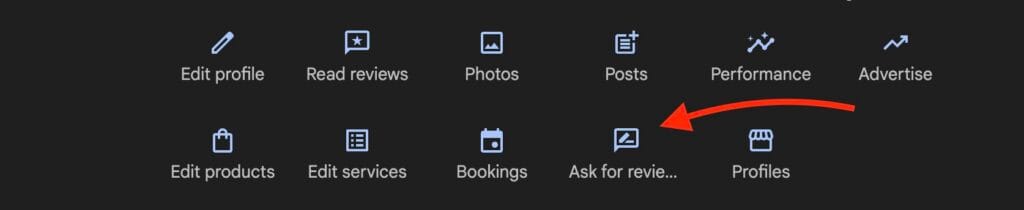
  • Set up a direct review link from your GBP dashboard. Remove every possible step between the client and leaving the review. Fewer clicks equals more reviews.

9 times out of 10, a client who is happy with their outcome will leave a review when you ask them personally. Clients who aren’t happy will leave a review whether you ask or not. So ask every time.

💡 PRO TIP: Respond to every review, positive and negative. Your response to a negative review is often more persuasive to a prospective client than the review itself. Keep it professional, empathetic, and brief. Do NOT include any case-specific information in your response. Ever.

Tip #6: Build the Legal Directory Stack

Legal directories are the citation infrastructure for law firm local SEO. They signal legitimacy to Google, they drive direct referral traffic, and some of them carry enough authority that a well-optimized profile can rank on its own for certain queries.

The essential directory stack for family law firms:

  • Tier 1 (non-negotiable): Avvo, Justia, FindLaw, Martindale-Hubbell, Lawyers.com
  • Tier 2 (high-value): HG.org, Nolo, Super Lawyers (if eligible), your state bar directory
  • Tier 3 (local trust signals): BBB, Yelp, Bing Places, Apple Maps, local chamber of commerce

Before building any citations, audit what you already have. BrightLocal or Whitespark’s Citation Finder will show you where your NAP data is inconsistent across directories. Fix inconsistencies first. Your firm name, address, and phone number need to match exactly everywhere. ‘Suite 200’ vs. ‘Ste. 200’ is enough to create a mismatch that dilutes your local authority.

Tip #7: Create Content That Answers Real Questions

The people searching for family law information are typing questions, not keywords. ‘How is property divided in an Ohio divorce?’ ‘What are my rights if my ex moves out of state with our kids?’ ‘How long does a contested divorce take in Franklin County?’

Those are the queries you want to answer. Not because they’re high-volume, but because the person typing them is actively facing that situation and looking for a firm that understands it. Content that answers these questions with real specificity builds trust, signals expertise to Google, and captures searchers at the moment they’re most likely to become a client.

Content ideas that actually work for family law:

  • ‘How Much Does a Divorce Cost in [County] County?’ with real ranges based on contested vs. uncontested, attorney fees, and court costs.
  • ‘[State] Child Custody Laws: What Every Parent Needs to Know.’ Practical, state-specific, genuinely helpful.
  • ‘What Happens to the House in a [State] Divorce?’ Property division is one of the most-searched family law topics. Own it in your market.
  • ‘How to File for a Protective Order in [County] County.’ Hyperlocal, high-urgency, almost zero competition.

This kind of content also signals E-E-A-T to Google. An attorney who writes specifically about Franklin County divorce procedure looks like an expert. A generic ‘what is divorce’ page does not.

Tip #8: Optimize for AEO / GEO – Not Just SEO

In 2026, a meaningful portion of legal searches are starting with AI. Someone types into ChatGPT: ‘I need a family lawyer in Columbus, what should I look for?’ or ‘My spouse just filed for divorce, what are my first steps?’ These searches don’t always result in a Google click. But if your content is the source the AI is pulling from, you are still getting found.

Answer Engine Optimization (AEO) or Generative Engine Optimization means writing content that AI tools can cite. That means:

  • Clear, direct answers to specific questions. Not vague introductions. Not legal disclaimers as the first paragraph.
  • Structured content with headers that match the actual questions people ask.
  • Author attribution. Real attorney names attached to real content with real credentials.
  • Schema markup that tells Google (and by extension, AI systems) exactly what your content is about, who wrote it, and what practice area it covers.

If your competitor’s attorney wrote a thorough, well-structured article on Ohio divorce procedure and yours is a generic FAQ page, they win the AI citation. They also win the Google ranking. These two things are increasingly the same outcome.

Tip #9: Make Sure Your Website Is Technically Sound

Google holds legal websites to higher standards than most other industries. YMYL classification means a slow, poorly structured, or thin website is penalized more harshly than it would be for a home services business. The technical basics are not optional:

  • Mobile-first. Most searches for family lawyers happen on a phone, often by someone who just received news that changed their day. Your site needs to load fast, read clearly, and make it easy to call with one tap.
  • Page speed. Run your site through Google PageSpeed Insights. Anything below 70 on mobile needs work. Below 50 is an emergency.
  • HTTPS. Non-secure sites are a trust killer in a practice area where confidentiality matters.
  • Schema markup. LocalBusiness schema, LegalService schema, and attorney/person schema all help Google understand your site and surface it appropriately.
  • Clean URL structure. Each practice area page should have a logical URL: /divorce-attorney-columbus-ohio/ not /page?id=42.

Tip #10: Track Calls from GBP Separately

Most family law firms think their calls come from their website. A large portion actually come directly from their GBP. Someone sees the Map Pack, reads your reviews, and hits the call button without ever visiting your website. If you’re not tracking this separately, you’re attributing those leads to the wrong channel and making bad marketing decisions as a result.

Set up a dedicated call tracking number for your GBP. Route it to your main line. Now you can see exactly how many qualified consultations are coming from local search versus your website versus paid ads. That data changes how you allocate your marketing budget.

💡 PRO TIP: Use a tool like CallRail for call tracking. Set up one number on your GBP and a different oneon your website. After 90 days, you’ll know exactly where your calls are coming from.Most attorneys are shocked by how much of their intake is driven by GBP alone.

Hiring A Family Law SEO Company? Know The Red Flags:

Legal SEO is one of the most competitive and most exploited niches in digital marketing. There are a lot of agencies collecting retainers and delivering rank reports. Before you sign anything, ask:

  1. Can you show me Map Pack improvements for a family law firm in a comparable market?
  2. How do you handle GBP management specifically? How often is it updated and what does that include?
  3. Do you understand state bar advertising compliance rules in my state?
  4. How do you attribute leads? Are you tracking GBP calls separately from website traffic?
  5. What does month-to-month engagement look like versus a long-term locked contract?
  6. Can you share SEO ROI examples from past family law clients?
  7. Do you have family law referrals I can speak with?

Run from anyone who guarantees rankings, locks you into 24-month contracts, or can’t show you real client results in this practice area. Activity-based reporting like ‘we published four blog posts this month’ is not an outcome. Qualified consultations and retained cases are outcomes.

One more red flag specific to family law: any agency that doesn’t mention state bar compliance when you’re discussing content and review strategy doesn’t understand the vertical they’re selling to.

The Best Family Law SEO Companies of 2026:

Ranked by local SEO depth, family law industry fit, and ROI accountability

RankAgencyBest ForStandout Strength
#1HooplessFamily law and high-stakes legal practices where intake directly ties to search visibility.GBP-first local strategy tied to qualified consultations, custom WordPress design
#2Rankings.ioFamily law firms in competitive markets wanting proven legal SEO at scale.Law firm exclusive, documented case volume growth, strong Map Pack track record
#3Juris DigitalFirms wanting a full-service legal marketing partner with deep SEO and content depth.Legal-only agency, attorney-authored content, Casey Meraz founder pedigree
#4LawRankFirms in saturated markets needing aggressive keyword targeting and high-converting design.UCLA Law co-founder, technical SEO depth, transparent reporting
#5BluShark DigitalMulti-location family law practices or firms with complex technical SEO needs.Founded by practicing attorney Seth Price, strong local SEO and schema expertise

#1: Hoopless

Hoopless was built on a specific premise: that health, law, and home services businesses get burned the most by bad agency relationships. The cost of getting it wrong is highest in those verticals. A family law firm paying $5,000 a month for rank reports isn’t a strategy, and getting it wrong is expensive.

The Hoopless approach is GBP-first, hyperlocal, and tied to outcomes that show up in your intake numbers, not just your analytics dashboard. No vanity metrics or 24-month lock-ins.

What makes Hoopless different: The team operates at the intersection of local SEO depth and vertical expertise. Family law, like behavioral health and personal injury, is a high-trust, high-urgency category where search visibility translates directly to retained cases. The strategy is built around that reality, including state bar compliance awareness that most generalist agencies skip entirely.

  • Google Business Profile optimization as a primary channel, not a supplementary one
  • Hyperlocal strategy: targeting winnable county and city-level searches, not unwinnable statewide terms
  • Custom website design built around intake conversion
  • Call tracking and attribution built in from day one
  • Content that demonstrates real legal expertise in your specific jurisdiction
  • ROI accountability: activity tied to qualified consultations and retained cases

Best for: Family law firms in competitive markets who are tired of paying for activity reports instead of results. You can also get a free audit of your firm and your competitors

#2: Rankings.io

Rankings.io is one of the most recognized names in legal SEO, and they’ve earned it. They work exclusively with law firms, which means every piece of their process, from keyword research to content to link building, is built around the legal industry’s specific dynamics.

For family law specifically, they bring a documented track record of improving Map Pack visibility and organic rankings in competitive markets. Their approach is data-driven and results-focused, with client reporting that goes deeper than most legal marketing agencies.

Best for: Established family law firms in competitive markets who want a proven legal SEO partner with exclusivity options and a strong track record.

Watch for: Premium pricing. This is a top-tier legal marketing agency, not a budget option for solo practitioners starting out.

#3: Juris Digital

Juris Digital has been doing legal marketing for over a decade and has built a reputation for genuine expertise. Founded by Casey Meraz, one of the most respected names in legal local SEO, the agency focuses exclusively on law firms and brings a level of strategic depth that most generalist agencies can’t match.

Their full-service model combines website design, SEO, content strategy, and paid search under one roof. What sets them apart is their willingness to be honest about what legal SEO actually requires in 2026, including GEO and AI visibility, not just traditional ranking tactics.

Best for: Family law firms that want a comprehensive digital marketing partner with deep legal industry expertise and a long-term perspective.

#4: LawRank

LawRank was co-founded by a UCLA Law School graduate, which gives them an understanding of legal practice that most marketing agencies simply don’t have. Their approach combines aggressive keyword targeting with high-converting website design and transparent, high-touch account management.

They’ve built strong case studies in competitive family law markets, with documented traffic and lead growth for firms that came to them stuck on page two or missing from the Map Pack entirely. Strong technical SEO fundamentals and honest reporting.

Best for: Family law firms in saturated markets who need aggressive SEO combined with a website that actually converts traffic into consultations.

#5: BluShark Digital

BluShark Digital was founded by Seth Price, a practicing attorney who grew his own firm significantly before starting an agency. That background matters in family law, where understanding the client relationship, the intake process, and the compliance constraints is what separates good legal marketing from expensive guesswork.

Their strength is in technical SEO depth and local optimization for multi-location practices. If you have offices in multiple counties or cities, their ability to build a scalable local SEO framework for each location is a genuine advantage.

Best for: Multi-location family law practices and firms with complex technical SEO needs that require an attorney-founded agency with real operational depth.

The Bottom Line

Family law clients are searching right now. Someone in your city typed ‘divorce attorney near me’ in the last five minutes. Whether your firm showed up, and whether it looked credible when it did, is entirely within your control.

The formula isn’t complicated. Get your GBP right. Build individual pages for each practice area. Earn reviews with a consistent, respectful ask. Stack your legal directory citations. Write content that answers real questions from real clients in your specific jurisdiction.

Most family law firms aren’t doing all of these things. The ones that are, own their local Map Pack. And they’re getting the calls.

Home Remodeler SEO: Top 5 SEO Tips and Best SEO Companies For Luxury Remodelers

A young millennial family bought their first home. They love the character, but the kitchen is falling apart, so they want it redone. We’re talking $40,000 minimum. While their parents and older generations may have sought referrals from their friends and co-workers… this couple opens Google, types ‘best kitchen remodelers near me,’ and call the first contractor in the Map Pack.

And even if that competitor has average tile work, if they show up… they win the bid.

This isn’t a fantasy – it’s happening every day! Longstanding luxury remodelers are losing business to newer contractors, just because they have a better Google presence.

Now, home remodeler SEO isn’t about gaming Google. It’s about making sure that when a high-intent homeowner is ready to spend real money on a real project, your business is visible, credible, and easy to contact. This guide tells you exactly how to do that. We’ll cover GBP fundamentals, website structure, review strategy, and the mistakes that are silently costing you jobs every month.

Why Local SEO is Critical for Luxury Home Remodelers

Most industries can survive on mediocre local SEO. Remodeling can’t. Here’s why the stakes are higher:

  • High-ticket, high-intent searches. Someone typing ‘bathroom remodel contractor [city]’ isn’t browsing. They’ve already decided to spend money. The Map Pack is where they go to pick who gets it.
  • Long sales cycles that start online. Homeowners research for weeks before picking up the phone. If you’re not visible during that research window, you don’t exist by the time they’re ready to call.
  • Project-based seasonality. Deck jobs spike in spring. Basement finishing picks up in fall. Your SEO strategy needs to move with your pipeline. A static approach leaves money on the table.
  • Photo-driven trust. This is a visual industry. A well-optimized GBP with real before-and-after photos closes leads before your website even loads.

The Map Pack is prime real estate for remodelers. Those three local business listings appear above organic results. Get there, and you’re getting calls. Miss it, and you’re watching competitors clean up your market.

Top 5 Tips For Remodeler SEO

Tip #1: Get Your Google Business Profile Right (Most Remodelers Don’t)

Your GBP is your most important local SEO asset. Not your website. Not your Houzz profile. Your GBP. And most remodelers are leaving serious money on the table because they set it up once and forgot about it.

Primary Category: The Most Impactful Decision You’ll Make

Google uses your primary GBP category as the main signal for matching you to search queries. If you’re a kitchen and bath specialist but your primary category is General Contractor, you’re competing against every contractor in your market on the broadest possible term. You’re losing the high-intent searches you actually want.

Your primary category should reflect your most profitable, most competitive service. If kitchen remodeling drives 60% of your revenue, your primary category should be Kitchen Remodeler. You can use up to 10 categories total. Use them. Common secondaries for remodelers include:

  • Bathroom Remodeler
  • Home Improvement Contractor
  • General Contractor
  • Flooring Contractor
  • Cabinet Store (if you do custom cabinetry)

Adding Services: Stop Leaving the Field Blank

The GBP services section isn’t just for show. Google uses your service listings as a ranking signal. The auto-suggested services in particular have a proven track record of boosting Map Pack visibility. Don’t write vague one-liners. Be specific:

  • ‘Complete kitchen transformation including cabinet installation, countertops, backsplash, and flooring. Starting at $30,000 for [City] homes.”
  • ‘Primary bathroom remodel: walk-in shower conversion, vanity replacement, tile work. Free in-home consultation included.”

Specificity does two things: it helps Google understand your offerings, and it pre-qualifies leads before they even call you.

Photos: This Is a Visual Industry!

Remodeling is sold visually. Before-and-after photos of a kitchen renovation will do more for your GBP conversion rate than any amount of keyword optimization. Here’s what most remodelers miss:

  • Name your photo files before uploading. ‘luxury-kitchen-remodel-columbus-oh.jpg’ is a ranking signal. ‘IMG_4521.jpg’ is not.
  • Upload consistently, not in bulk. Two to three new project photos per week signals an active, legitimate business to Google.
  • Match photos to the services you want to rank for. If you want more bathroom jobs, post bathroom photos. Google reads image context.

Tip #2: Your Website Needs Location Pages That Actually Work

One website page titled “Kitchen Remodeling” is not a local SEO strategy. It’s a placeholder.

If you serve multiple cities or neighborhoods, every meaningful service area needs its own landing page. Not a thin, copy-pasted version with the city name swapped in. Google has seen that trick a thousand times.

A real location page for a home remodeler should include:

  • The city name used naturally throughout: in the headline, body copy, meta title, and URL. Not stuffed, just present.
  • A description of work you’ve actually done in that area, with real project details.
  • Before-and-after photos geotagged or captioned with the specific location.
  • A local phone number or at minimum a local call-to-action.
  • Schema markup identifying your service area, business type, and specific offerings.

Tip # 3: MORE Reviews (Reviews Are Revenue)

Over 90% of homeowners read reviews before contacting a contractor. Reviews aren’t a nice-to-have. They’re a conversion mechanism and a ranking factor, running in parallel.

When to Ask

The best time to request a review from a remodeling client is at the final walkthrough or immediately after.

Build a simple follow-up sequence: a direct review link texted or emailed the day after project completion, with one gentle reminder three to five days later if they haven’t left one. Ask every customer. The ones who aren’t happy will leave a bad review either way, and you asking them won’t be the final straw. In fact, they might leave a good review instead of a bad review if you ask them the right way!

How to Ask

Don’t just ask for “a review.” Prompt them: “will you do me a huge favor… and leave me a review on Google? It really helps our business.”

9 times out of 10, people will leave a review when you ask them this way. In fact, many who aren’t even that happy till, too, believe it or not!

💡 PRO TIP
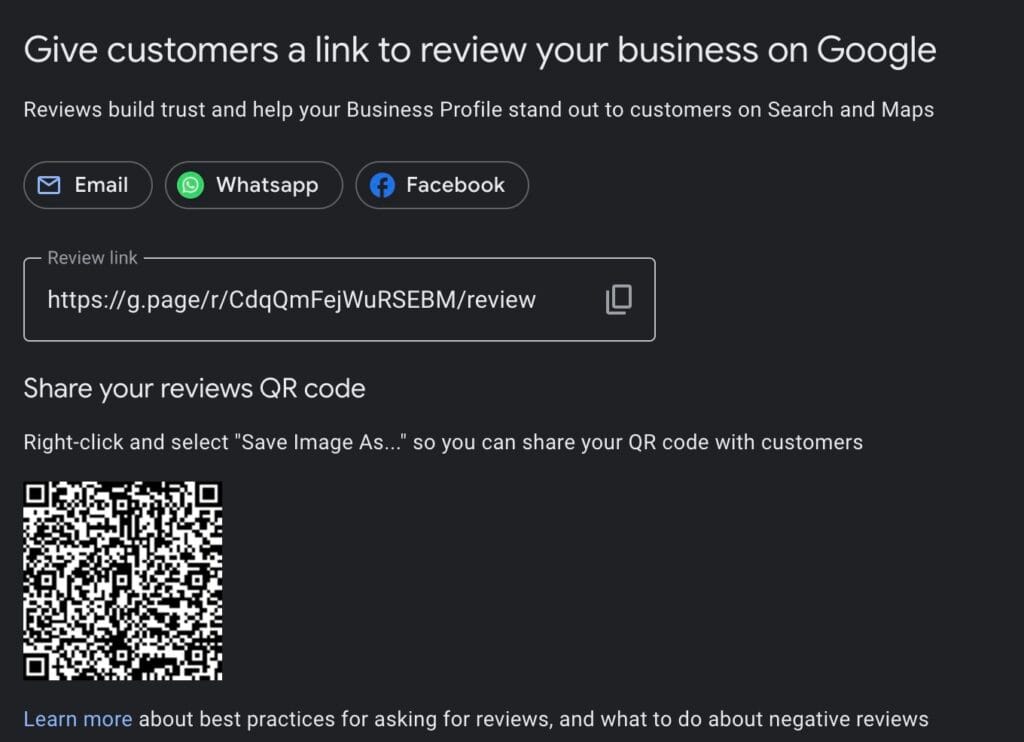
Be sure to text them a link to your Google Business Profile – there is a URL and QR code you can share directly from Google where you manage your profile:

Tip# 4: Build Citations

Citations are mentions of your business name, address, and phone number (NAP) across the web. They’re table stakes for local SEO, not a differentiator. But if yours are wrong or inconsistent, they’ll actively hurt your rankings.

For home remodelers, the essential citation stack includes:

  • Universal: Google Business Profile, Yelp, Bing Places, Apple Maps, Facebook
  • Industry-specific: Houzz, Angi, HomeAdvisor, Thumbtack, BBB, NAHB directory
  • Regional: Local chamber of commerce, city business directories, regional home builders associations

Before you build any citations, run a gap analysis. Tools like BrightLocal or Whitespark’s Citation Finder will show you where you’re missing and where your NAP data is inconsistent. Fix inconsistencies first. Then build out the gaps.

One critical point: your GBP address, your website footer, and every directory listing need to match exactly. Inconsistency, even “St.” vs. “Street”, sends a trust signal to Google that something’s off.

Tip # 5: Content That Earns Calls, Not Just Traffic

Most remodeling contractor blogs read like they were written by someone who’s never held a tile saw. Vague “tips for kitchen renovation” posts with stock photos and no real insight. Google is getting better at identifying this kind of content, and homeowners can smell it immediately.

Write content that demonstrates you actually know this trade:

  • “How Much Does a Kitchen Remodel Cost in [City] in 2025?” Include real price ranges broken down by scope, not national averages.
  • “Permit Requirements for Bathroom Additions in [City/County].” Hyperlocal, genuinely useful, and almost zero competition.
  • “[Neighborhood] Kitchen Remodel: Before and After.” Case study format with real photos, project scope, and timeline.

This kind of content does three things: it ranks for long-tail queries, it builds trust with homeowners doing their research, and it gives Google’s AI Overview something worth citing.

Hiring A Home Remodeler SEO Company? Know The Red Flags:

Before you hire an agency to help with SEO, there are some red flags to look out for:

The home services space is full of agencies selling “SEO” that amounts to monthly rank reports and a blog post about “10 Tips for Kitchen Renovation.” Before you sign anything, ask:

  • Can you show me Map Pack improvements for a comparable remodeling client in a comparable market?
  • How do you handle GBP management? Specifically: how often do you update it and what does that include?
  • How do you attribute leads? Are you tracking calls from GBP separately from website traffic?
  • What does month-to-month engagement look like versus a locked contract?
  • Can you share examples of SEO ROI from past remodeling clients?
  • Do you have any remodeling referrals I can speak with?

Run from anyone who guarantees rankings, locks you into 24-month contracts, or can’t show you real remodeling client results. Activity-based reporting like ‘we built 15 citations this month’ is not an outcome. Qualified phone calls and booked estimates are outcomes.

The Best Home Remodeler SEO Companies of 2026:

Ranked by local SEO depth, remodeling industry fit, and ROI accountability

RankAgencyBest ForStandout Strength
#1HooplessLuxury home remodelers, home builders, high-stakes markets.Local-first strategy tied directly to ROI, custom WordPress design
#2Builder FunnelHome builders & remodelers wanting full inbound strategyDeep industry expertise, content-driven authority
#3Hook AgencyRemodelers wanting a specialized, transparent partnerHigh-converting service pages + clean site architecture
#4Blue CoronaData-focused contractors wanting detailed analyticsROI dashboards, conversion rate optimization focus
#5Digital ShiftSingle-location remodelers wanting steady organic growthOne remodeler per service area. No internal competition.

#1: Hoopless

Hoopless was built on a specific premise: that home services, health, and legal businesses get burned the most by bad agency relationships. The cost of getting it wrong is highest in those verticals. A remodeler who pays $3,000/month for activity reports and zero qualified leads isn’t just wasting a marketing budget. They’re losing $40,000 kitchen jobs to contractors who figured out local search.

The Hoopless approach is GBP-first, hyperlocal, and tied to outcomes that show up in your CRM, not just your rank tracker. No vanity metrics. No 24-month lock-ins. No guaranteed rankings from people who can’t guarantee the weather.

What makes Hoopless different: The team operates at the intersection of local SEO depth and vertical expertise. While they work with other industries, like health and law: Home remodeling, like behavioral health or law firms, is a high-trust, high-ticket category where search visibility translates directly to revenue. The strategy is built around that reality.

  • Google Business Profile optimization as a primary channel, not a supplementary one
  • Hyperlocal strategy: targeting winnable service areas, not vanity metro-level keywords
  • Custom website design
  • Call tracking and attribution built in from day one
  • Content that demonstrates trade expertise and portfolio
  • ROI accountability: activity tied to qualified calls and booked estimates

Best for: Home remodelers in competitive markets who are tired of paying for rank reports instead of results.

#2: Builder Funnel

Builder Funnel focuses exclusively on home builders, remodelers, and contractors. They’re not applying a generic B2B playbook to a trade business. They understand long sales cycles, high-ticket conversions, and the way homeowners actually research and select contractors.

Their full inbound approach combines SEO, content, email, and marketing automation. It’s best suited for remodeling businesses that want to build sustained organic authority over time, not just chase quick Map Pack wins.

Best for: Established remodelers who want a long-term content and SEO strategy, not a quick-fix campaign.

Watch for: Premium pricing. This is a full-service, industry-specialized shop. Not a budget option.

#3: Hook Agency

Hook Agency has built a strong reputation in the contractor and home services space with a pragmatic, results-focused approach. They build high-converting service pages, structure clean local content architecture, and communicate transparently about what’s moving and what isn’t.

Their sweet spot is remodeling companies that need a specialized partner without enterprise-level complexity or pricing. Strong SEO fundamentals, contractor-specific experience, and honest reporting.

Best for: Remodeling companies that want a focused, communicative SEO partner with clear contractor expertise.

#4: Blue Corona

Blue Corona has been working with home services contractors since 2008, and they’ve built a solid reputation for data-driven marketing that connects SEO activity to revenue. Their detailed ROI dashboards and conversion rate optimization focus set them apart from agencies that only report on rankings.

For remodelers who are analytical by nature and want to know exactly what each marketing dollar is generating, Blue Corona’s reporting depth is a genuine differentiator.

Best for: Data-focused remodeling businesses that want rigorous attribution and detailed performance reporting.

#5: Digital Shift

Digital Shift’s most notable policy is also their most valuable one: they only work with one remodeler per service area. That means if you’re their client in your market, they’re not simultaneously optimizing a competitor’s GBP two miles away.

They’re a strong fit for single-location remodelers who want steady, sustained organic growth through GBP management, local citations, and content, without the complexity of a full-service agency engagement.

Best for: Single-location remodelers who want a long-term local SEO partner with exclusive market commitment.

The Bottom Line

Home remodeling is a local business. Every job you do is in someone’s neighborhood. That neighbor probably has the same aging kitchen or outdated bathroom. Local SEO is how you turn a great job into a steady pipeline of neighborhood referrals, Map Pack calls, and qualified leads from homeowners who were already planning to spend money.

The formula isn’t complicated. Get your GBP right. Build real location pages. Earn reviews consistently. Track what’s actually driving calls. Create content that proves you know your trade.

Do those things better than your competitors, and the Map Pack follows.

What Are The Best SEO Services For Law Firms?

Let me guess: a potential client searched “injury lawyer near me” and your firm didn’t show up in the Map Pack. Someone else did. They got the call. You didn’t.

That’s the bankable cost of poor local SEO. Not just a ranking metric.

Legal search is one of the most competitive local verticals on the map. Most potential clients find law firms on Google, and the Map Pack is where that first impression happens. If you’re not in it, you’re functionally invisible to the majority of high-intent searchers in your area.

The good news: local SEO for law firms is highly winnable (even against larger competitors) if you get the fundamentals right – or get a partner who can.

The bad news: the agency market is chock full of firms charging $5,000-$10,000+ per month and more for activity reports that don’t move a single needle, and can’t tie their effort to cases. I’ve seen it countless times.

This guide breaks down the best local SEO services for law firms — including ones that lawyers can apply DIY, to full-service agencies for firms ready to invest seriously.

No fluff, just tips from someone working in Local SEO for over a decade (including the most competitive verticals & markets, like personal injury in NYC).

⚠  WATCH OUT

Not all agency pricing is what it appears. Multiple legal SEO agencies have been acquired by private equity in 2025, including On The Map Marketing (Cloud Equity Group) and Hennessey Digital (Trinity Hunt-backed Herringbone). PE ownership isn’t automatically a disqualifier — but it is a yellow flag worth investigating before you sign. Ask who owns the agency, who runs strategy, and who will actually work on your account.

What’s Different About Legal SEO?

Generic SEO and legal SEO are not the same game. Here’s what makes law firm local search its own beast:

  • State bar compliance: You can’t guarantee outcomes, you can’t solicit in some jurisdictions, and you can’t incentivize reviews. Every piece of content needs to stay inside the lane of what your bar association allows.
  • YMYL status: Google classifies legal content as Your Money or Your Life. That means stricter E-E-A-T (Experience, Expertise, Authoritativeness, Trustworthiness) requirements. Generic content farms producing 600-word blog posts will actively hurt you.
  • High-intent, low-patience searchers: Someone searching ‘criminal defense attorney near me’ at 11pm is not in research mode. They need help now. The Map Pack is where that decision gets made — not page two of organic results.
  • Practice area variation: Estate planning SEO in a mid-sized market and personal injury SEO in Los Angeles require completely different strategies and budgets. Estate planning in the suburbs: $3K–$6K/month. PI in NYC: $20K–$40K/month. The competitive landscape drives the cost.
  • AI search is already here: ChatGPT and Google AI Overviews are now recommending specific law firms — and some firms showing up there don’t rank on page one of traditional Google. You need to be visible in both environments.

With that context set, here’s how to approach your options — starting with what most firms need to nail before they spend a dollar on an agency.

The Foundation Every Law Firm Needs Before Anything Else

Most firms jump straight to “hire an agency” without having the basics in order. If these aren’t right, you’re paying an agency to build on sand.

Your Google Business Profile

Your GBP is the single most important local SEO asset you own. It influences approximately 35% of local ranking decisions — and it’s free. A complete, verified, optimized profile outperforms an incomplete one by 42% in local rankings.

For law firms specifically:

  • Primary category: Use the most specific practice area category available — “Personal Injury Attorney” not “Law Firm” if PI is your focus. Add secondary categories for each additional practice area you want to rank for.
  • Business description: 750 characters. Use them. Include your primary practice areas, cities you serve, and a clear differentiator. Avoid generic filler — Google reads this.
  • Services: List every service with a description. Include variations: “Car Accident Lawyer,” “Auto Accident Attorney,” “Vehicle Collision Lawyer” — they index separately.
  • Photos: Real photos of your office, team, and attorneys. Not stock images. Google’s image recognition matters, and profiles with authentic photos get more clicks.
  • Google Posts: They don’t directly impact rankings, but they signal an active profile and convert clicks to calls. Post case wins (anonymized), FAQs, and legal updates relevant to your city.
  • Q&A section: Seed your own Q&A with the questions potential clients actually ask. This content surfaces in your listing and can be pulled into AI Overviews.

⚑  PRO TIP

Use a custom call tracking number linked to your GBP via your Google Ads call extension settings. That way, calls from organic GBP appearances and calls from Ads can be separated in your reporting — so you know exactly which channel is generating intake. It’s tucked away in GBP advanced settings and most firms completely miss it.

Legal Directory Profiles

Legal directories carry real local ranking weight and are a primary trust signal for both Google and prospective clients. At minimum, every law firm should have complete, verified profiles on:

  • Avvo — primary legal directory, profiles rank independently in Google
  • Justia — high domain authority, free attorney profiles
  • FindLaw — strong authority, especially for practice area pages
  • Martindale-Hubbell — important for B2B and referral-based practices
  • Lawyers.com — companion to Martindale
  • Your state bar association directory — mandatory signal of legitimacy
  • SuperLawyers and Best Lawyers (where earned) — trust builders

These aren’t optional nice-to-haves. They’re baseline citation signals that local legal SEO runs on. A firm missing from these directories is sending a negative trust signal — regardless of how good their website is.

Best DIY SEO Services for Law Firms

You don’t technically need an agency to do good local SEO. But you do need the right tools, the discipline to use them consistently, and the knowledge to know how to use them. Here are the best options for law firms that want to handle it in-house, or want to understand what an agency might be using when providing SEO services to a law:

Whitespark — Citation Building & Local Rank Tracking

Best for:  Law firms who want accurate, permanent citations without a subscription trap
Pricing:  Citation building: $20-$999 one-time. Grid tracking is also affordable starting at $20/mo
The good:  Manual citation building with citations you own permanently with no monthly fee to keep them live. Their local rank tracker and grid scan for Google Maps rank tracking is best-in-class.
Watch out:  It’s more cost-effective to do manual citation orders than the packages.
Verdict:  This is my go-to recommendation for law firms that want citations done properly and accurate Google Maps rank tracking + competitor analysis.

Loganix — Citations, Link Building, Basic PR

Best for:  Agencies and in-house teams who want niche-targeted links and citation with guaranteed live placement without spending the time of manual outreach.
Pricing: : $400–$850+ per link.
The good:  Industry and city-targeted citation building — a law firm gets listed on legal directories, not food blogs. 100% guaranteed live citations: if one doesn’t publish, they replace it at no cost. Five-day turnaround.
Watch out:  Their link building pricing is premium ($400–$850+/link) and positions them toward mid-market and larger firms.
Verdict:  Loganix earns its spot as a top easy link and citation service that I often recommend for law firms with a genuine niche focus.

CallRail – Call Tracking for SEO Attribution

Best for:  Any law firm that wants to determine where their calls are coming from.
Pricing:  Starts at $50 per month with 5 tracking numbers and 200 minutes .
The good:  Great reporting and integration options for CRMs, Google Ads, etc.
Watch out:  Can get expensive if not set up right, and can also cause issues with certain VoIP phone systems if not set up properly.
Verdict:  This is my go-to tool for tracking attribution of online case leads.

Ahrefs – Technical SEO, AI visibility tracking

Best for:  Technical SEO and AI prompt tracking
Pricing:  Starts at $129/mo
The good:  Great content tools, competitor analysis, keyword research, and website technical crawls
Watch out:  Can get pricey, and it isn’t a good solution for local rank tracking.
Verdict:  This is my go-to tool for keyword research and competitor analysis. While I personally often use ScreamingFrog for technical analysis, that is likely too technical for DIY firms. Ahrefs technical SEO features will be more DIY-friendly.


Best Agency SEO Services For Law Firms

If you’re in a competitive market like personal injury in a major metro, or criminal defense in a dense city, DIY local SEO will only take you so far. The firms occupying the Map Pack in those markets have serious agency investment behind them.

⚠  WATCH OUT

A note on pricing reality before you read further: Anyone selling “law firm SEO” for $500/month usually is either not worth, or worse… can cause actual damages. In my experience, budget agencies under $1500/month aren’t able to deliver real expert oversight or strategy. The investment required scales with your market: estate planning in a mid-sized city might need $2,000-$4,000/month; while PI in New York could run in excess of $10,000/month or more. That’s not price gouging, that’s just the reality of the competition level you’re fighting. There’s a reason Google Ads are so expensive in this vertical!

With that said, here’s the honest breakdown of who’s worth talking to for the best law firm SEO service:

1. Whitespark (Agency Service)

Why: They aren’t just a SaaS – Whitespark also has SEO services, and they help a lot of law firms. Darren Shaw is a long-time leader in Local SEO.

2. Sterling Sky

Why: Another leader and top-voice in Local SEO is Sterling Sky. They help many law firms, and Joy Hawkins is regularly a source for newly discovered rank factors. Like Hoopless Marketing, they are known to offer simple month-to-month agreements.

3. Hoopless Marketing

Why: Founder Sam Knight is a Platinum Google Product Expert for Google Business Profile as well as a Product Expert for Google Ads. He’s worked for law-firm-only agencies, and has helped some of the largest Personal Injury firms in the US. Since Hoopless is a new AI-Native agency, they are able to maximize value and provide highly-custom strategies at a price point that is very approachable – even for small law firms. Hoopless may not claim to be the cheapest SEO service, but they are one of the most affordable law firm SEO agencies for what you get.

4. AttorneySync

Why: Gyi Tsakalakis is a leading voice in law firm SEO. AttorneySync is hyper-focused on cases, qualified leads over raw leads, and helping law firms grow beyond just website traffic.

5. Postali

Why: A frequent winner of Weby Awards for their authoritative custom web design, they are a law-firm-only agency with transparent reporting and industry-leading best practices (no offshore farming)

How The Best SEO Service Providers Should Be Reporting to Law Firms

If your current agency sends a report every month showing keyword rankings and organic traffic, and that’s it: that’s a red flag. Not because rankings don’t matter, but because they’re not the outcome. The outcome is signed cases.

A genuinely outcomes-focused legal SEO agency should be reporting on:

  • Competitor gap analysis: What are the firms above you doing that you aren’t? This drives the strategy, not just the execution.
  • GBP calls and direction requests: Direct signals that local search is producing intake opportunities.
  • Organic leads by channel: Phone calls tracked by source. Form submissions tracked to organic vs. paid. These are the numbers a CMO or managing partner can defend to their partners.
  • Map Pack position trends: Are you moving up in the Pack for your primary terms? Over a 6-month trend, not month-to-month noise.

⚠  WATCH OUT

Red flags that should end the conversation before you sign: “Guaranteed first-page rankings” (against Google ToS and is either a lie or black-hat tactics), 24–36 month lock-in contracts (they know results won’t justify renewal), refusal to disclose where content is written (it’s AI or offshore content farms), and reporting only on rankings and traffic with no connection to leads or cases.

The Bottom Line

Local SEO for law firms is not complicated in theory. GBP optimization, consistent NAP, legal directory citations, review volume, and localized content are the levers. What makes it hard is the consistency, the competitive intelligence, and the patience to measure outcomes over months, not weeks.

Whether you’re a solo practitioner who wants to handle this yourself or a PI firm ready to invest with a legal SEO agency, the right answer starts with the same place: your GBP and your website. The Map Pack isn’t a lottery. It’s a race with measurable inputs. You just have to show up with the right ones!

Local SEO For Drug Rehab Centers? How to Use Local SEO To Drive Admissions

Contents:
1. Pitfalls of Rehab Center SEO
2. Why Local SEO for Rehab Centers?
3. Local SEO Rank Factors for Rehab Centers
4. Steps For Local SEO
5. Tracking SEO For Rehab Centers
6. Attribution

How Local SEO Works For Rehab Centers:

If your treatment center isn’t focusing on Google Business Profile: you’re leaving admissions on the table. In fact, it’s not uncommon for over 50% of addiction treatment admissions to come from Google Maps, the Local Map Pack, or Local Finder.

Local SEO for rehab centers is your most powerful growth engine. And while it might not seem intuitive, I’ve seen facilities double admissions just by shifting their SEO strategy from a statewide focus to a hyperlocal focus. I’ve also seen centers with solid call numbers make the wrong strategy pivots because they didn’t have the right attribution or tracking in place.

So, if your treatment centers is serious about growing admissions organically and doing it the right way, this guide is for you. We all know Google Ads isn’t sustainable in this space (it’s insanely expensive). If you apply some of the tips below, you’ll be able to generate more drug rehab leads with far lower spend!

Rather listen instead? You can hear all of the following tips and more on Sam’s interview on the Recovery Reach Podcast:


Why Most Treatment Center SEO Strategies Miss the Mark

It’s common for addiction treatment centers to want to rank statewide—or even nationally. After all, people travel for care, right?

Yes, but here’s the truth:

Local intent search = Map Pack first.
And if you’re not in the Map Pack, you’re not the first (or second, or third) thing people see.

If someone in Columbus searches for “medical detox near me”, they’re going to see three local results in a map. Even if your facility ranks #1 organically, it’s still showing up below those three. On mobile, that means you’re off the screen—and out of sight means out of mind.

The Pitfall of “Going Statewide”

Focusing too broadly means:

  • You lose local relevance
  • You miss the Map Pack
  • You don’t win statewide or locally

When I was the digital marketing director for a multi-location facility in Ohio, we shifted from statewide to city-first. The result? 12–15% year-over-year growth in call volume without additional spend.

Why Local SEO Strategy Wins For Drug Rehab Centers

Most rehab centers default to the same instinct: rank statewide, cast a wider net, fill more beds.

The problem? Statewide rankings don’t exist in local search.

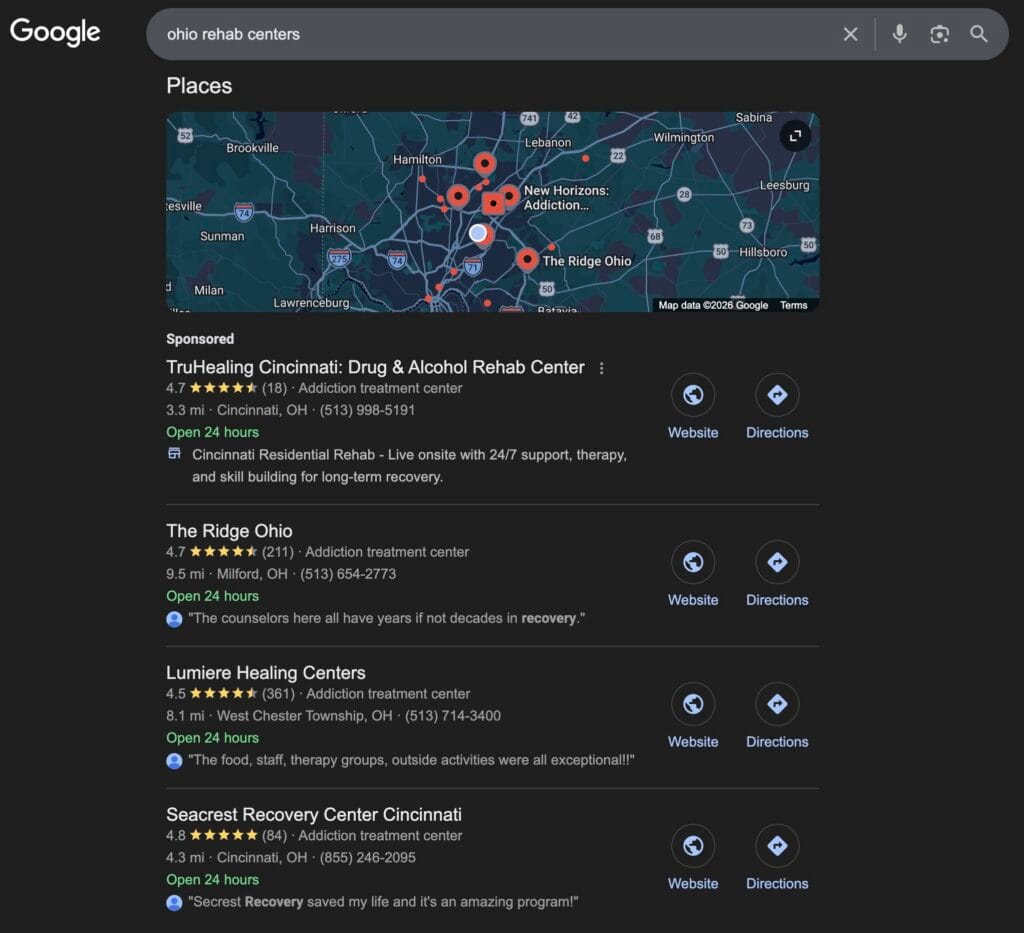
Search “rehab centers [your state]” right now. You’ll see rehab centers near you — not the best-reviewed center in the state, not the largest, not the one with the most service pages about that state. The Map Pack always appears first for searches like this, and nobody ranks in the Map Pack in an entire state at once.

The Map Pack runs on three things: proximity, prominence, and relevance (all measured relative to where the searcher is standing at the moment that they search).

Same keyword. Completely different results. Here’s what that looks like when you search “Ohio rehab centers” from Cincinnati versus Cleveland:

Cincinnati:

Cleveland:

The winners here aren’t optimizing for Ohio. They’re optimizing for their city.

This matters even more for drug rehab centers because Google Ads in this vertical are brutally expensive. For brick-and-mortar facilities like residential programs, detox centers, PHPs, IOPs, and outpatient clinics: local SEO is almost always the highest-ROI channel available. Here’s why:

Speed to results: Local SEO moves faster than national SEO because you’re competing in a defined geographic pool, not against every treatment center in the country. Even a brand-new facility can appear in the Map Pack quickly with the right fundamentals in place.

Zero-click calls: In local search, users routinely find a GBP listing, read a handful of reviews, and call — without ever visiting a website. Those calls don’t appear in your analytics as organic traffic. But they’re your highest-value conversions.

It’s winnable: Dominating a city or neighborhood is genuinely achievable for most facilities, even against larger competitors, if you execute the basics correctly. Ranking nationally against well-funded aggregators is not.

Admit-ready intent: Someone searching “detox near me” or “IOP in Columbus” isn’t browsing. They’re ready to act. These searches convert at a fundamentally different rate than broad informational queries, and no amount of statewide content strategy captures them.


The 3 Local SEO Rank Factors For Rehab Centers

Local SEO for rehab centers relies on three core ranking factors: distance from the searcher, relevance to the search term, and prominence. Understanding these is critical:

1. Distance

You can’t fake this. Google prioritizes proximity. If your facility is in West LA, you won’t show up in the Map Pack for East LA unless you do some serious lifting (or move).

2. Relevance

This is all about your content. If you want to rank for “Residential Rehab in Los Angeles”, you need a page that says exactly that. “Residential Treatment” alone won’t cut it.

Quick Tip: Put your city in the H1s, title tags, and slugs.
“Medical Detox”–> “Medical Detox Phoenix”
“IOP” –> “IOP Program Los Angeles”

3. Prominence

This is your authority. It’s built from:

  • Reviews (especially on Google)
  • Branded searches
  • Driving directions requests
  • Media mentions
  • Backlinks
  • Social presence

Google tracks how many people are engaging with your brand—even before they click your website. So yes, even PR and brand awareness campaigns can help in Local SEO.

How to Rank Drug Rehab Centers With Local SEO:

These aren’t fluff. These are proven strategies we implement at Hoopless to help our treatment center clients dominate their local markets:

1. Optimize Your Google Business Profile (GBP)

  • Fill out every field (yes, even the ones buried under “Info” and “Services”)
  • Use at least 5 categories, up to 10 if relevant


    Examples: Addiction Treatment Center, Alcoholism Treatment Program, Mental Health Service, Psychiatric Hospital, Counselor, Psychiatrist, Psychologist

  • Add all relevant services—especially the ones Google auto-suggests in GBP
  • Use a dedicated tracking number (see below)
  • Add images, description, and hours
  • Embed driving directions on your website for each location

2. Use Service Area Pages (The Right Way)

Want to rank just outside your physical location? Build dedicated location pages for nearby neighborhoods or towns. But don’t pretend you’re located there (Google hates that, and so do users).

Example:
Page Title: “Addiction Treatment near Smithfield”
Body Copy: “Located just 15 minutes south of Smithfield…”
[Embed Google Maps Driving directions!]

Be honest. Be specific. Use map embeds and driving directions.

3. Build citations:

Citations accross the web are a foundational Local SEO ranking signal. For treatment centers, the citation stack looks different from most other local businesses because there are important industry-specific directories that carry genuine SEO weight.

Universal Citations Every Facility Must Have:

  • Google Business Profile (primary — everything else feeds this)
  • Apple Maps
  • Bing Places for Business
  • Yelp
  • Facebook Business Page
  • Better Business Bureau

Reab Industry Directories:

These carry specific topical authority for addiction and mental health searches and should be a priority for treatment centers:

  • SAMHSA’s Treatment Locator: The Substance Abuse and Mental Health Services Administration maintains a government directory of licensed treatment facilities. Being listed here is both an SEO citation and a trust signal that sophisticated searchers actively look for.
  • Psychology Today: Heavily trafficked for behavioral health searches. Their therapist and treatment center listings rank independently in Google for local queries.
  • Recovery.com: A high-authority behavioral health directory with 150,000+ monthly searches from people actively seeking treatment. Complete, current profiles here drive direct referral traffic in addition to citation value.
  • Rehabs.com / American Addiction Centers network: High domain authority in the space.
  • FindTreatment.gov: Federal government directory — high authority, trusted signal.
  • Addiction Center: Significant organic traffic and backlink authority in the behavioral health vertical.

Tracking: Use Grid Rank Trackers to See the Real Picture

If you’re searching on Google from your treatment center and see your facility in the Map Pack: that doesn’t really mean anything. Because distance is a factor, you’re pretty much always going to rank first for all sorts of keywords from your facility. But two blocks away? That might be a completely different story.

Tools like Local Falcon or Localo show you where you rank across different parts of your city—not just a single search result.

You might be #1 in South Phoenix, but #15 in North Phoenix. That means half your market can’t even see you.

These grid scans give you tactical insight into where to double down or where to build location pages.


Attribution: Don’t Guess Where Your Leads Are Coming From

This is where most treatment centers—and even agencies—get it wrong.

If you’re relying only on Google Analytics or G4 to understand how SEO is performing, you’re missing 60–70% of the picture.

Why?

Because many calls never hit your website.
They come straight from your Google Business Profile.

How to Fix That: Call Tracking Metrics + Dynamic Number Insertion

If you take one technical thing away from this post, make it this.

✅ Use a unique tracking number for your Google Business Profile

This is the only way to track calls that come directly from the Map Pack.

  • Use a number not found anywhere else on your site
  • It should forward to your main line
  • Track it as a separate source in your call tracking platform

✅ Add UTM parameters to your GBP website link

This powers dynamic number insertion (DNI) when someone clicks from GBP and lands on your site.

Example:

https://yourtreatmentcenter.com/?utm_source=google&utm_medium=organic&utm_campaign=gmb


It also will let you track keyword click and impressions in Google Search Console! Just filter by pages and select the URL that shows the UTM parameter. Now you can differentiate homepage traffic from Google Maps traffic. 

✅ Use DNI in Call Tracking Metrics (CTM) or CallRail

When someone lands on your site with the UTM above, you can swap the phone number on the page to match the source with DNI.

This tells you:

  • They found you through local search
  • They clicked your GBP link
  • They called after reviewing your website

You now know exactly what part of your SEO strategy drove the call.

What Gets Measured Gets Managed

At Hoopless, we don’t just “do SEO.” We track:

  • Map Pack presence across your service area
  • Call volume by source (Map Pack vs. website)
  • Keyword performance by location
  • Click-to-call rate
  • Call quality and lead outcomes

If you’re not measuring what matters, you’re probably overvaluing vanity metrics like traffic and rankings—while undervaluing the stuff that’s actually driving revenue.

Step Up Your Treatment Center’s Marketing With Local SEO

Local SEO for treatment centers isn’t about traffic. It’s about calls, admissions, and impact.

If you’ve got a physical location and a solid program, you’re already halfway there. Now it’s time to win the Map Pack (and clients will follow).

How We Help Rehab Centers Grow With Local SEO

At Hoopless, in addition to our proven results in Local SEO – we also have decades of combined experience in the addiction treatment space, from in-house digital marketing roles to admissions consulting and more.

We help residential treatment centers cut waste, identify channels that drive admissions, and execute best-in-class rehab SEO services with a hyperlocal strategy to drive calls and lower CPA.

Our Local SEO plans typically include:

  • Market and demographic research
  • Patient/client modeling
  • Google Business Profile management, optimization, and strategy
  • Google Maps spam fighting
  • Content development & content strategy
  • Branding and design
  • Call tracking
  • Conversion Rate Optimization (CRO)
  • AI / Answer Engine Optimization (AEO)
  • On-page and technical SEO
  • Multi-location and multi-state strategies
  • Growth strategy and reporting
  • Competitor research and analysis
  • And more

Book a discovery call today to see if you may be a fit for Hoople

Want help implementing all of this?
We build and manage local SEO campaigns specifically for behavioral health and treatment centers. From building beautifully on-brand websites to fully managed SEO and Google Ads campaigns (yes, we help handle LegitScript), you can get a fractional full-service digital marketing department without the added employee overhead.

Reach out today to book a free discovery call.

Why We’re The Trusted SEO Company For Rebab Centers

We’re regularly mentioned and quoted in the most trusted Local SEO publications. In fact, our Co-Founder, Sam Knight, was 1 of 47 Local SEO voices to contribute to the popular 2026 Rank Factors Survey from Whitespark. Check it out here!

Hoopless Contributes to Whitespark’s 2026 SEO Rank Factors (Our Takeaways)

After an extended hiatus, Whitespark’s Local Search Rank Factors report is back! This time, our very own Sam Knight, co-founder of Hoopless, was asked to contribute to the survey – made up of 47 of the most notable voices in Local SEO.

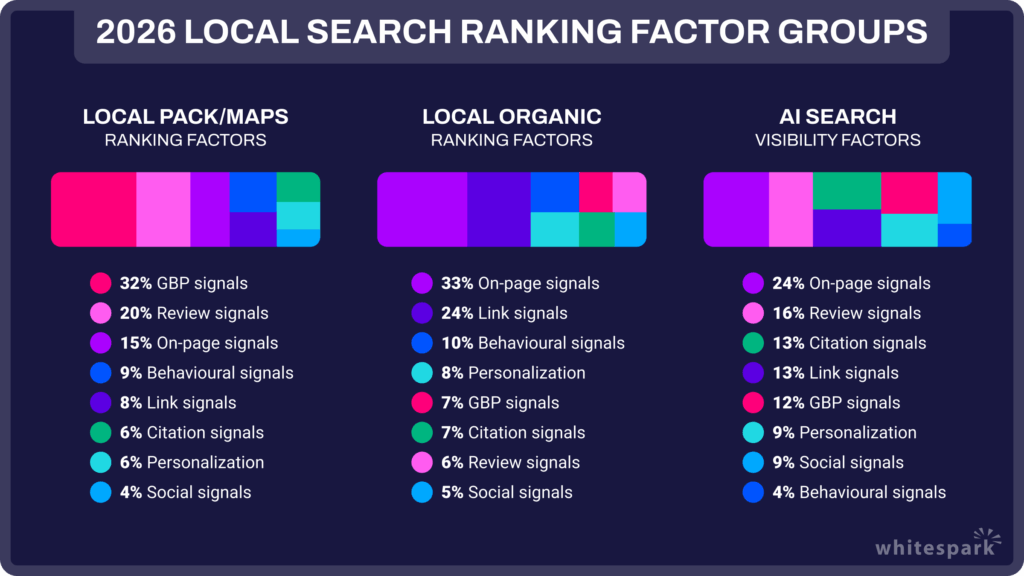
The survey is a comprehensive 2-hour assessment of 187 weighted factors – from Map Pack rankings, local organic rankings, conversion impact, and new for this year – AI visibility!

There’s been massive impact with AI search, but thus far local search has been remained mostly insulated.

(Broader, informational “national” type queries have seen the steepest decline in organic traffic).

But that’s not to say Local SEO hasn’t changed. Local SEO continues to change, and the 2026 Survey gives a great pulse from the brightest minds in the industry.

Here are the top highlights:

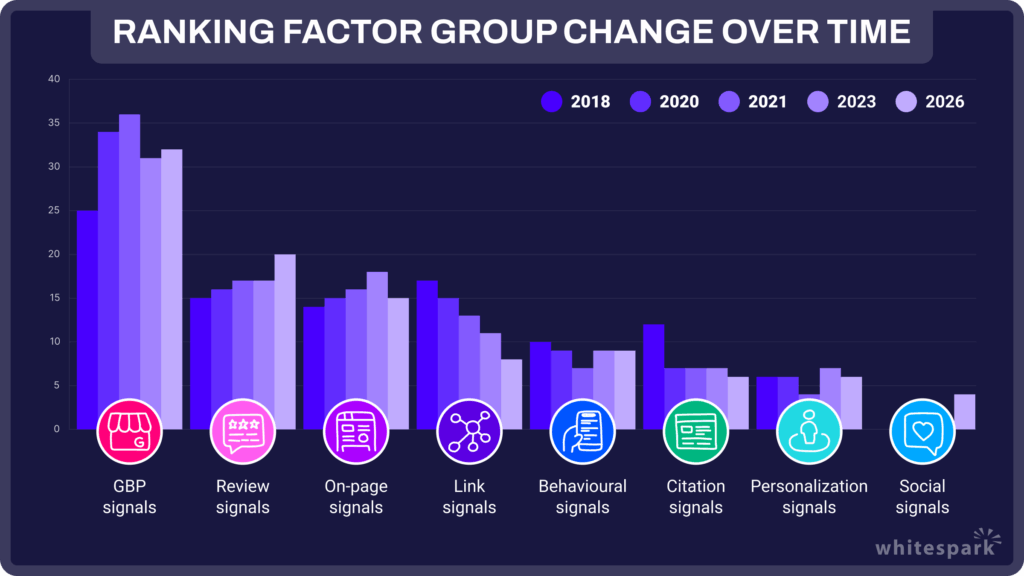
Local SEO Rank Factor Changes Over Time

Most Notable Changes in 2025-2026

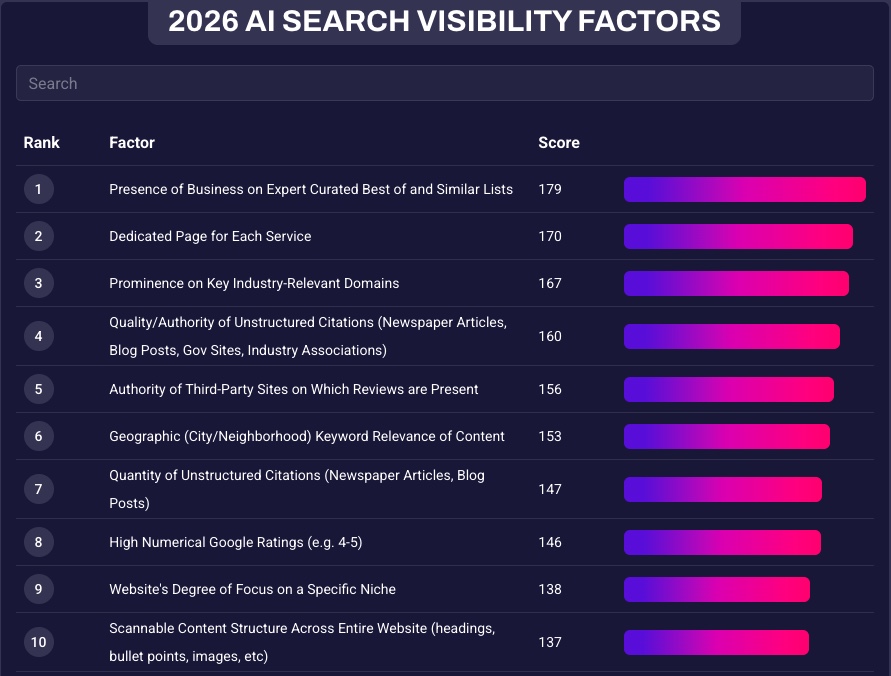
Top 10 AI Search Factors

These are just some of the highlights, so be sure to check out the full report – there’s a ton of insight!

The Psychology of Review Requests: A Simple Method to Get More Reviews and Repeat Customers

I can’t count how many times I’ve heard business owners say they think they need to create incentives in order to get reviews. But here’s the thing: you really don’t need to incentivize reviews. There’s a lesson in psychology that makes one simple method WAY more effective… and it may even reduce negatives reviews and create repeat customers.

The Ben Franklin Effect: A Counterintuitive Approach to Reviews

There’s something in psychology called the Ben Franklin Effect. It suggests that people like you more when you ask them for a favor. It’s believed to be caused by cognitive dissonance. (People like to be helpful, but they can’t help someone they don’t like!)

Therefore, to rationalize helping you, they tend to adjust their perception of you.

Ben Franklin famously used the tactic with a bitter rival who later became a friend. Over a century later, multiple university studies confirmed the phenomenon.

Now I’m not suggesting this simply to manipulate your customers! I’m sharing this because fear of negative reviews is the top reason clients either don’t ask for reviews, or are just way too picky. The reality is that, ironically, asking customers for reviews could actually prevent negatives reviews – and may even help create repeat customers, too!

I recently shared about this on LinkedIn, and the concept was also discussed on the Whitespark Local Update Podcast:

The Myth of “Poking the Bear”

“I don’t want to encourage the unhappy ones!” 😨

I hear this all the time. Business owners are terrified that asking for reviews will somehow unleash a flood of negativity.

In all my years of doing this with countless clients, I have NEVER seen an uptick in negative reviews when you start asking every customer.

Here’s the truth: People who are going to leave a bad review will do it anyway. Asking them isn’t what will push them over the edge. In fact, it just might do the opposite.

Real Results: A Case Study

We have a current client who started asking every single customer over SMS. In a year, they went from around 180 reviews with a 4.4 rating to nearly 400 reviews with a 4.8 rating.

Their rate of negative reviews has also declined: they have had just ONE 1-star review in the past year, texting hundreds of customers… compared to 6 in the prior year (with some 2-3 star reviews, too).

Let that sink in. More asks = better ratings, not worse.

The Hidden Benefit: More Repeat Customers

Here’s something most business owners don’t realize: asking for a review doesn’t just get you reviews… it could also gets you repeat customers, another benefit emphasized by Darren Shaw on LinkedIn

When a customer does you a favor by leaving a review, the Ben Franklin Effect kicks in again. They’ve now invested time and effort into your business. They’ve publicly endorsed you. And psychologically, they need to justify that investment.

The result? They’re more likely to come back.

Think about it: once someone has told the world how great your business is, they’re not going to turn around and go to your competitor. That would create cognitive dissonance. Instead, they double down on their decision and become more loyal to you.

I’ve seen this play out over and over. Customers who leave reviews tend to have higher lifetime values. They come back more often, spend more money, and refer more people. The simple act of asking for a review strengthens the relationship, not just the review count. I suspect this may also be because customers probably feel more personally addressed, and that the business truly does care about their experience.

So you’re not just building social proof with reviews. You’re building customer loyalty at the same time!

The Formula That Works

👉 Here’s what I see consistently works best:

1. Use SMS for the best success rate

Email gets ignored. SMS gets read. It’s that simple.

2. Ask personally or with the owner/staff’s name in the text

Generic automated messages feel like spam. Personal messages feel like… well, a personal request.

3. Ask for a FAVOR (this is important)

This is where the Ben Franklin Effect comes in. Don’t just tell people where/how to leave a review. Specifically acknowledge that the review only helps you, so you are asking the customer bluntly to help you out.

4. Ask every customer

Consistency is key. No cherry-picking. No second-guessing. Just ask.

The Text Template That Actually Works

Here’s the text template that works best for me:


“Hi [Client_Name], this is [Owner_Name], owner of [Business]. Just wanted to send a personal thank you! Would you do me a small favor and leave a review? {{Google_Review_URL}}”


That’s it. Simple, personal, and effective.

Take Action Today

So give it a shot. It’s one of the easiest, cheapest, and most effective ways to grow your business.

Stop overthinking it. Stop worrying about the negative reviews that probably won’t come. Start asking every customer, and watch your ratings climb!